
Siren Song Capital
Oliver Thompson
January 2nd, 2026
Musings on Artificial Intelligence
Artificial Intelligence. It’s all the rage these days and a buzzword that gets thrown around a lot by businesses of every flavor. I’m reminded of the dotcom era when a business could put anything internet related in its name or quarterly earnings reports and watch their stock price boom. I think there are many similarities in today’s markets, especially with the “magnificent seven” and AI related stocks. What seems magnificent is that investors, analysts, and other market pundits have all seemingly forgotten basic accounting and valuation principles in their frenzy for AI stocks.
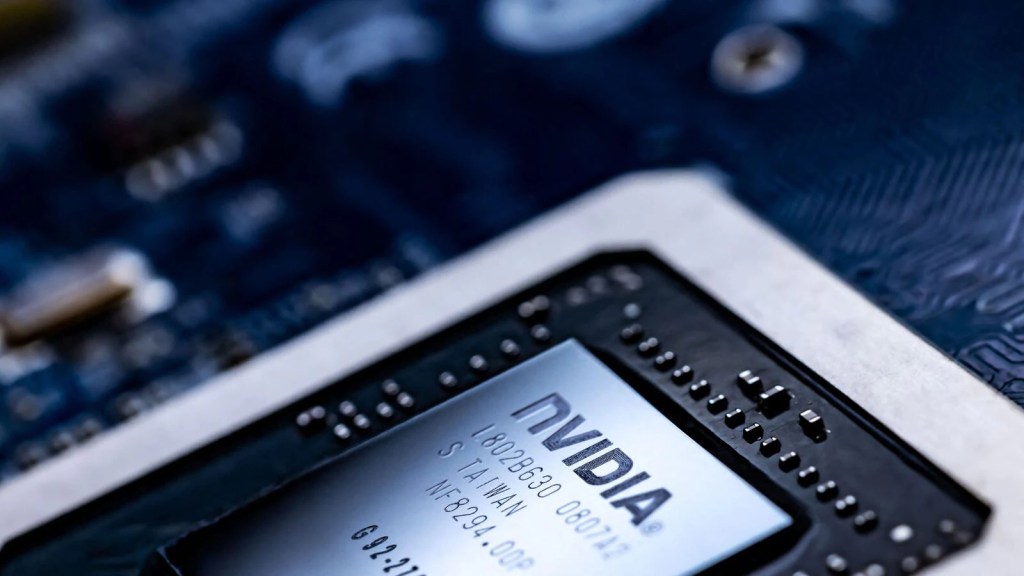
In the context of markets and valuations, the most unsettling issue being overlooked, or at least willfully ignored, is the fact that Nvidia’s rapid growth mainly stems from the capital expenditures of Meta, Microsoft, Alphabet, Amazon, and Oracle. These firms spend many billions to purchase GPUs from Nvidia, capitalize the expenditures on their balance sheets, and increase the “useful life” of the asset in order to lengthen depreciation schedules, artificially inflating EPS. A type of feedback loop is forming from all of this activity, as these companies build capacity for AI related ventures which have yet to earn a positive return on all of this new invested capital. Nvidia reaps the rewards, and the infrastructure build-out continues at a rapid scale to keep up with what the competition is doing.
Another dynamic which deserves serious consideration is the fact that Nvidia is taking ownership stakes in various AI startups whose business models dictate that the largest expenses are for the type of hardware that Nvidia manufactures. These businesses then take the newly injected capital and give it right back to the investee to purchase GPUs. Nvidia is effectively financing their own revenue and earnings growth with these strategic “investments” in AI companies that are starved for product. Nvidia’s capital expenditures fuel the orders that become Nvidia’s revenue. Now, this doesn’t imply fraud or illegal activity, but it does raise some very real concerns about the sustainability of this activity.
This “we give you money, you give it back to us as a purchase order” financing is akin to a game of musical chairs, only with huge amounts of capital and global markets as the playing pieces. The vast majority of these companies are not yet profitable, burning through cash in an attempt to expand their competitive position, and relying on continued investments to survive. Investors seem to be mistaking capacity expansion with monetization and high demand instead of treating this as the beginning of a new, unproven industry with dominant players yet to emerge. Any slowdown in these manufactured revenues or magnificent seven infrastructure build-out and the AI sector will see significant valuation compression. This could also happen slowly in a more deflationary sense if profits don’t materialize, as invested capital bases grow and the accounting expenses act as a yearly drag on profits that are no longer at the same levels.
That being said, there are differences between today’s companies and the hot stocks of the dotcom era, mainly when it comes to real profits and stable underlying businesses. The fact that the magnificent seven and other top companies have sound business models and produce abundant cash flows is what many market participants point to in order to justify sky high valuations. This figure is also used as the backbone of their arguments which, in my opinion, all boil down to a version of “well, you see, this time it’s different.” As any seasoned investor knows, that mentality produces great speculation and a market rife with short-term thinking.
The risk here isn’t that Nvidia and other Mega-cap companies go bankrupt like many of the dotcom businesses, but rather, that valuations have become “priced to perfection” and any execution misstep will cause prices to tumble. I think the biggest issue at play is the unknown level of returns these companies will see in relation to the massive AI infrastructure build outs they’ve been undertaking. So far, these are the beginning stages of this new industry, and markets have already baked in years, if not decades, of high expectations into today’s stock prices. If the return on invested capital isn’t as high as markets are expecting, the companies are now left with an inflated invested capital base with large expenditures that they’ve capitalized on their balance sheets. Depreciating these assets against earnings will begin to weigh on earnings per share and overall return on invested capital if the projects don’t pay off as anticipated.
All of this is interesting to me from an investment, valuation, and accounting perspective. In reality, that may be the least of our concerns regarding the proliferation of AI companies and infrastructure build. No one knows the future outcome of all of this, and I am certainly nowhere near qualified to make a prediction, but there are a few things worth asking ourselves regarding this new technology. Here’s something I’ve been thinking for a while: Let’s say AI proves to be as capable or potentially more capable than we initially thought in increasing productivity and efficiency within companies. Due to this increase in output and efficiency, a large percentage of corporations and even medium-sized businesses lay off a substantial portion of their workforce. With unemployment high in America or across the globe, and jobs permanently erased, who is left to purchase the glut of products that our businesses are now pumping out? Why would we need or want to do this to ourselves?
I am far from alone in worrying about the future that this new technology brings, and people vastly more intelligent than I have voiced concerns recently that resonated with me. In the postscript of his latest memo, Howard Marks discussed his well-reasoned personal concerns about AI. He asked a question that implies severe future repercussions, but one that no honest person has an answer for. His line of thinking goes like this: If AI eliminates all the junior positions, whether it’s a junior financial analyst, a juris doctor, junior surgeons, etc., how will anyone in the next generation elevate to a senior position and become a master of their craft? How can anyone enter a junior role and build up the necessary experience and years of training to specialize in something and pass that knowledge to the next generation if these roles are eliminated?
Reading a recent interview of a man I admire greatly, Li Lu, forced me to consider a question that leaves me uneasy. Lu is asked for his thoughts on AI and he discusses the potential good that it can bring, such as expanding the capabilities of the human mind, eliminating biases in our research and thinking, and allowing for scientific breakthroughs to be reached. These are all net positives, and something I hope happens. On the other hand, he is concerned about what happens to our dominance as a species if AI is allowed to develop without the proper constraints. If it begins to rapidly acquire human knowledge, understanding, and reasoning, it will very quickly replace us as the most intelligent entity on earth. If we are no longer the most intelligent species on the planet, which is the sole reason for our continued dominance, what happens?


Leave a comment