
Siren Song Capital
Oliver Thompson
November 11th, 2025
I had an assignment for my Managerial Finance class today that I felt would make for an interesting blog post. The forum topic was to comment on how the U.S. business climate and stock market might fare over the next two years. Below is my take.
The behavior of the stock market is very difficult, if not impossible to predict. Investors are better off spending their time searching for mispriced securities or building a watchlist with intrinsic value ranges to pounce on during the next correction or bear market. However, for the purpose of this exercise, I will comment on current market conditions and attempt to get a sense of where we stand without making any bold predictions. As John Maynard Keynes reminds us, “the market can stay irrational longer than you can stay solvent.” In other words, it’s never wise to deploy capital based on predictions of market behavior. Bubbles can last a long time even when anyone performing fundamental research can see that the market is overvalued and speculative. Business conditions are murky, but certain actions have consequences directly attributable to those actions, and more certain predictions can be made.
So, where do stock markets stand as of November, 2025? In my opinion, markets are overvalued with low expected forward returns, indexes are highly concentrated and distorting conditions, there is mass speculation surrounding AI, trade/tariff conditions are uncertain and dynamic, and a “this time it’s different” attitude seems to prevail. Current data supports my stance. The S&P 500 index has a P/E ratio right around 32 which implies forward returns of just over 3% nominal, and probably 0-1% real. Almost 40% of the index is comprised of just seven companies and the remaining 493 companies have an average multiple over 20. If history is any indication of future prospects (and it usually is), the market as a whole remains elevated compared to historical norms.
For too long, the efficient market theory and index funds have been espoused as gospel. This leads to massive capital inflows into the index which distorts prices and inflates the already top-heavy index. As more capital flows into the S&P 500, it disproportionately lifts the largest constituents, which in turn gain even more index weight, drawing yet more inflows. Seth Klarman describes this as a “self-reinforcing feedback loop.” Eventually, size and valuation collide with mathematical limits. Nvidia is a prime example: at a $5T dollar market cap it is already valued at 1/6 of the entire U.S. GDP. Nvidia would surpass the entire U.S. GDP within roughly 3-4 years if it continued compounding at the rate it has been for the last 5 years, a scenario that defies economic realism.
Investor psychology today is dominated by optimism and risk taking. After more than 16 years without a sustained bear market, there are many market participants who have never experienced anything but the lengthy bull market. These newer investors seem to have a fear of missing out mentality as evidenced by the speculative enthusiasm surrounding artificial intelligence and technology stocks in general. Price changes seem to be largely driven by sentiment and emotion rather than changes in business values.
On the macroeconomic/business side of things there are a few forces at play that are currently making prospects less favorable than they were last year. Rising fiscal deficits with no solution, persistent inflation and potential pauses on rate lowering are headwinds for American businesses and consumers. Tariff and trade uncertainties are weighing heavily on corporate guidance, with many companies just figuring out the implications and beginning to provide guidance to investors at earnings calls. Yet through all of these difficulties, equity prices continue to set record highs and shake off seemingly every bit of bad news. I would argue that this is a signal that psychology, not fundamentals, are driving market movements. The “this time it’s different” argument tends to rest on the idea that today’s tech companies have real revenues and consistent cash flows. This is true for a handful of the big players, but it seems to be extrapolated to the rest of the market as well. Again, trees don’t grow to the sky, and the multi trillion-dollar valuations have to revert back to intrinsic value or slow down at some point.
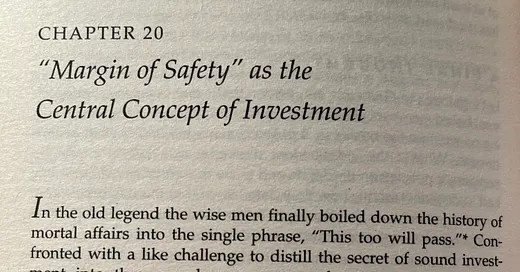
Howard Marks’s recent memo, The Calculus of Value, describes today’s environment as having moved from elevated to worrisome. The relationship between price and intrinsic value is stretched, and investor behavior resembles the late stages of a long expansion. When optimism dominates, the gap between price and value widens, leaving little or no margin of safety. Given these conditions, investors are wise to favor defense over aggression. At present valuations, prudence calls for reducing exposure to richly valued equities, increasing allocation to higher-quality or income-producing assets, and maintaining liquidity for future opportunities. The objective is not to time the market but to ensure staying power when psychology inevitably reverses. Discipline, valuation awareness, and patience remain the most reliable defenses in the current market environment.


Leave a comment